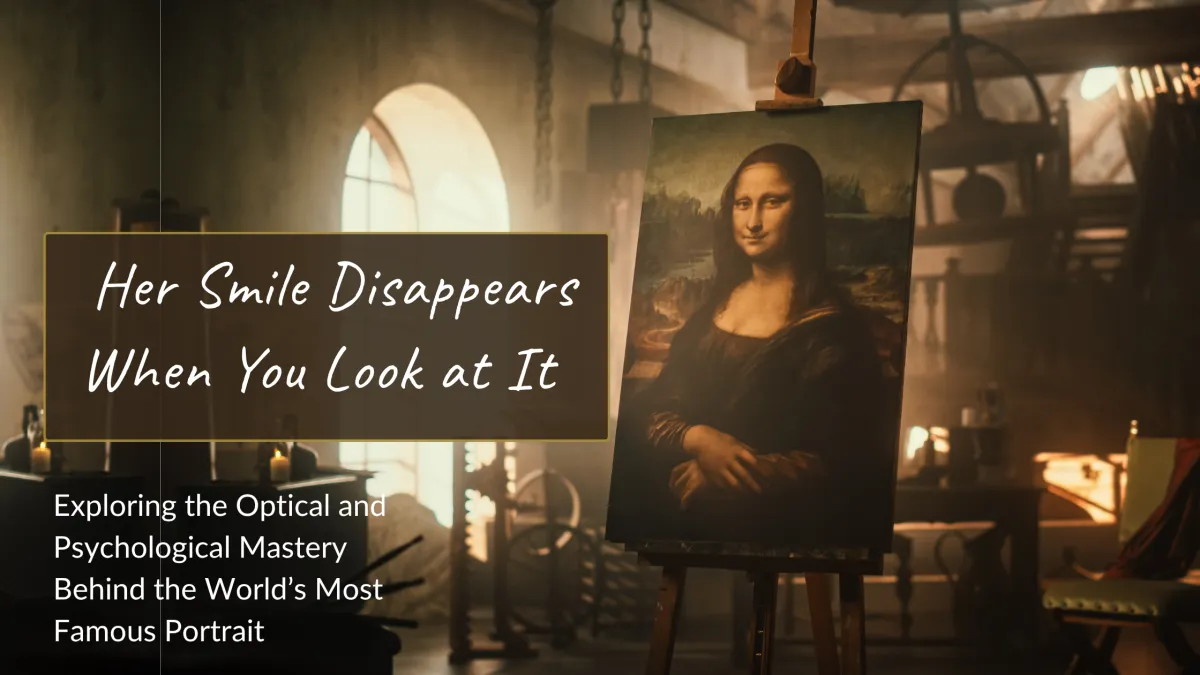
Her Smile Disappears When You Look at It
Her Smile Disappears When You Look at It
Exploring the Optical and Psychological Mastery Behind the World's Most Famous Portrait
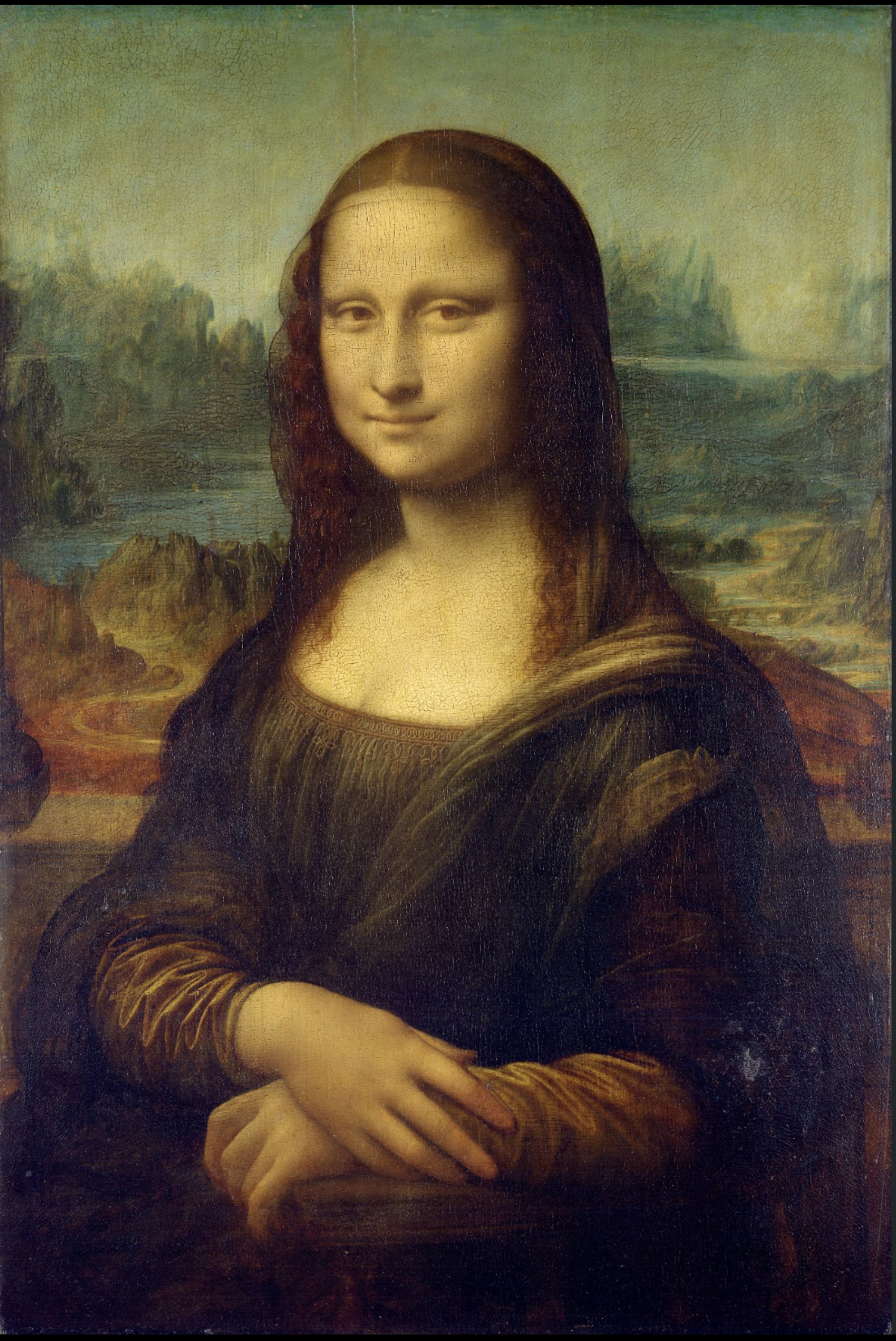
The Mona Lisa (c. 1503–1519) is one of the most recognized images on earth, reproduced endlessly in postcards, memes, and coffee mugs. Yet despite its familiarity, the painting still has the uncanny power to grip us. At first glance, it looks simple: a modest woman with no jewelry, dressed in muted tones, seated before a dreamlike landscape. But as you linger, something happens — her eyes seem to shift, her smile flickers in and out of focus, and she appears strangely alive.
How did Leonardo achieve this? The answer lies in his mastery of vision — anatomy, optics, psychology, and painterly technique — all woven together into a portrait that works as much on our brains as on our eyes.
A Portrait Unlike Any Other
Leonardo began the portrait in 1503, commissioned by the Florentine merchant Francesco del Giocondo to depict his wife, Lisa Gherardini. While portraits of women at the time were often stiff, upright, and formal, Leonardo broke convention. He placed Lisa in a relaxed three-quarter pose, angled yet direct, filling the frame with her presence. Her gaze — calm, self-assured, and unusually direct for a female sitter — was revolutionary.
This format would influence portraiture for centuries. The triangular, or pyramidal, composition gave a sense of stability and harmony, while the natural pose suggested immediacy and intimacy. For Renaissance viewers used to rigid depictions, Lisa seemed startlingly real.
Composition and Atmospheric Effect
The portrait follows the High Renaissance ideal of pyramidal design. Lisa's broad shoulders and folded arms create the wide base, guiding the eye upward toward her softly lit face. Behind her, Leonardo deployed another of his innovations: aerial perspective.
In the distance, rivers wind and hills fade into bluish haze. Details diminish as they recede, mimicking how the human eye perceives atmosphere. The result is not just depth but also a sense of mystery, as though Lisa is suspended between us and a dreamlike world.
There's another subtle trick at play. The horizon lines in the background don't align perfectly with her shoulders. Though her posture is balanced, our brains read a slight mismatch, producing the impression of gentle movement — as if she shifts within the frame.
Sfumato and Chiaroscuro: Blurring to Reveal
Leonardo pioneered sfumato, literally "smokiness" — a method of blending tones so seamlessly that no hard edges remain. Instead of clear outlines, Lisa's features dissolve into soft transitions. He achieved this through countless thin glazes of translucent paint layered over a pale ground, allowing light to filter through the surface and reflect back with a glowing, skin-like effect.
Paired with chiaroscuro, the deliberate use of light and shadow, sfumato gives the portrait dimensionality and ambiguity. Shadows under the eyes and along the cheeks shift subtly as light changes or as the viewer moves, making her expression seem mutable. The face appears less like painted surface and more like living flesh in motion.
The Gaze That Seems to Follow You
One of the most repeated claims about the Mona Lisa is that her eyes follow the viewer. Psychologists call this the "Mona Lisa Effect." Research has complicated this popular belief. A 2019 study measured her gaze at about 15° to the right, not directly forward. By strict geometry, her eyes shouldn't follow us.
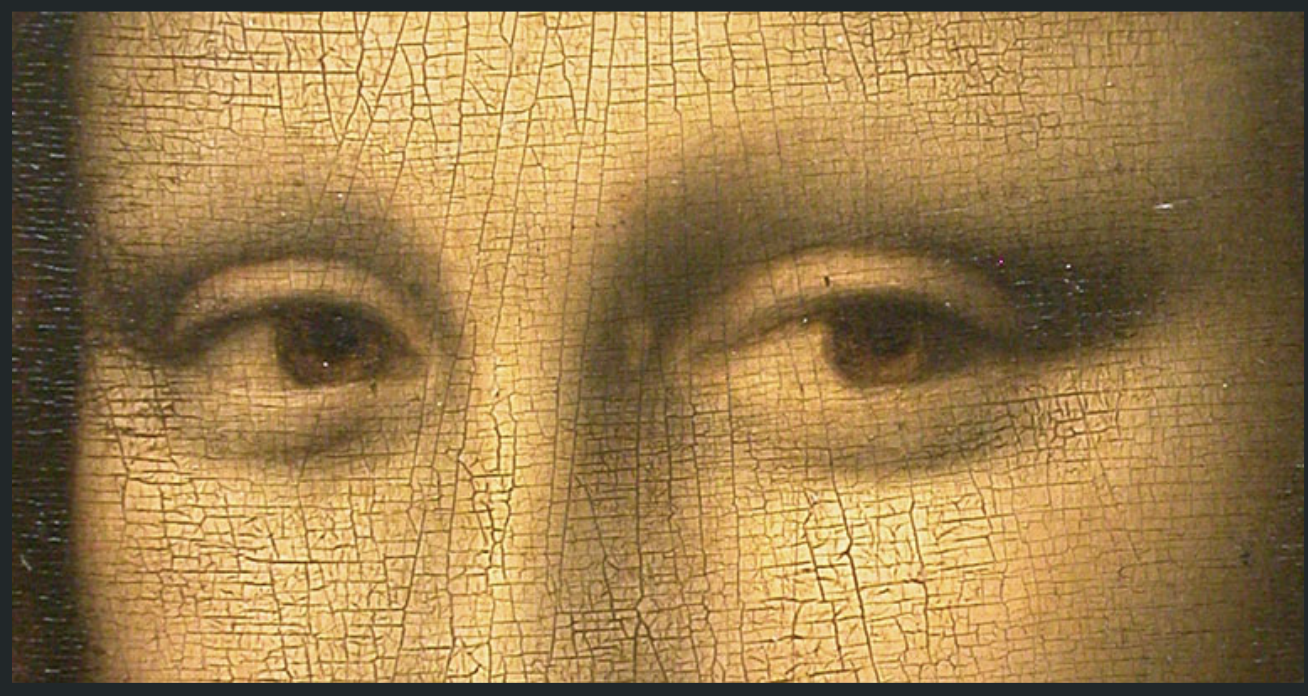
Yet many viewers report the sensation anyway. Why? It turns out that perception isn't just about angles — it's about cognition. Neuroscientists explain that our brains assign intent to gazes. Even a slightly averted gaze can activate motion-processing and social-cognition areas of the brain, giving us the eerie sense that the subject is engaged with us.
Distance also matters. From farther away, her gaze feels more direct; up close, it becomes ambiguous. This uncertainty is exactly the kind of perceptual "slippage" Leonardo engineered: you never feel entirely certain whether Lisa is looking at you or past you, which keeps you returning to check again.
The Smile That Appears and Disappears
Perhaps the most famous feature of the painting is Lisa's enigmatic smile. It seems to come and go — appearing playful one moment and melancholy the next. Far from mystical, this illusion is rooted in vision science.
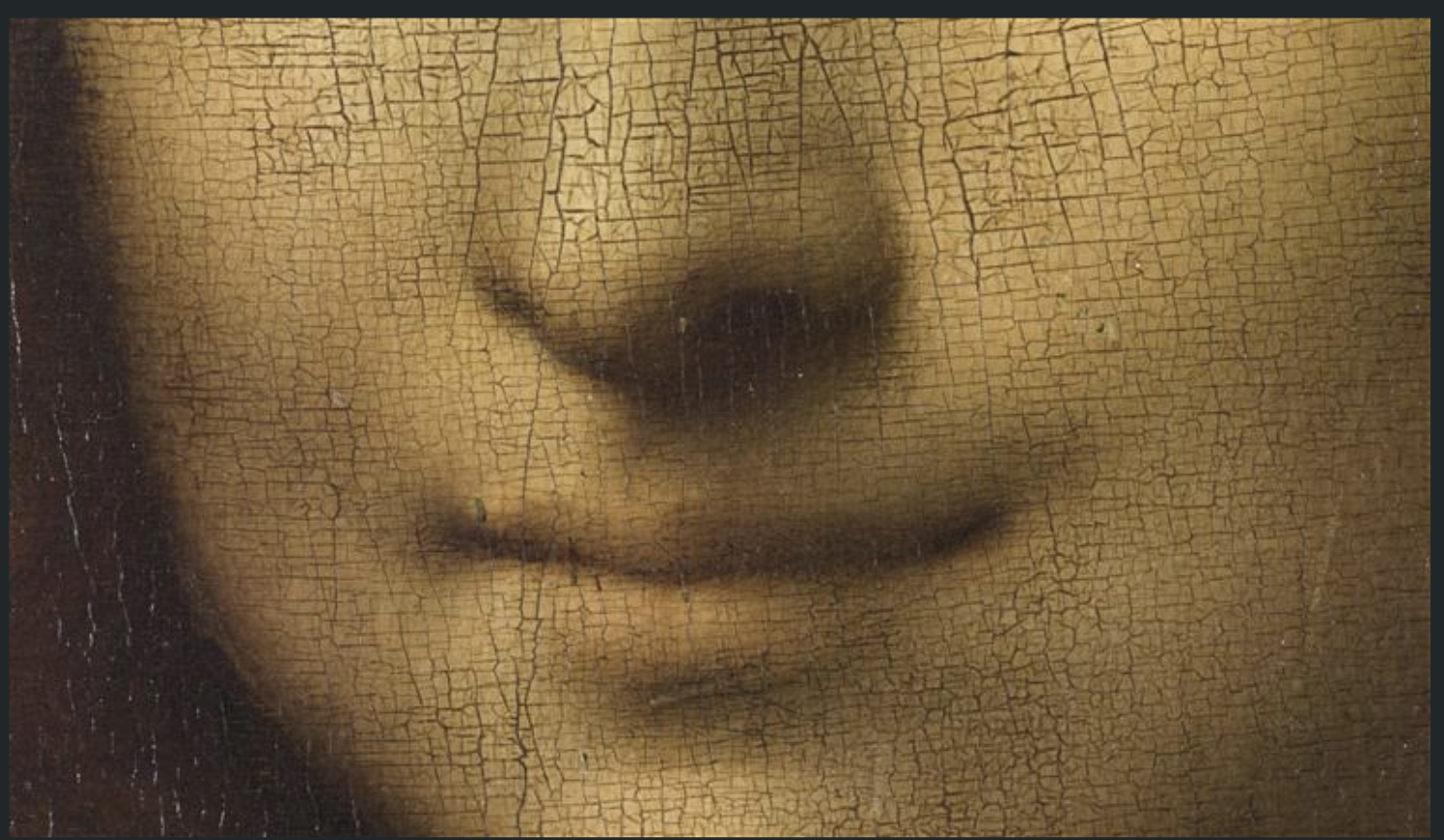
Harvard neuroscientist Margaret Livingstone showed that Leonardo built the smile using low spatial frequencies — broad shadows and soft shapes processed better by peripheral vision than by direct foveal vision. When you look directly at her mouth, the detail is too subtle to register. Shift your gaze upward to her eyes or cheeks, and the smile emerges in your peripheral vision.
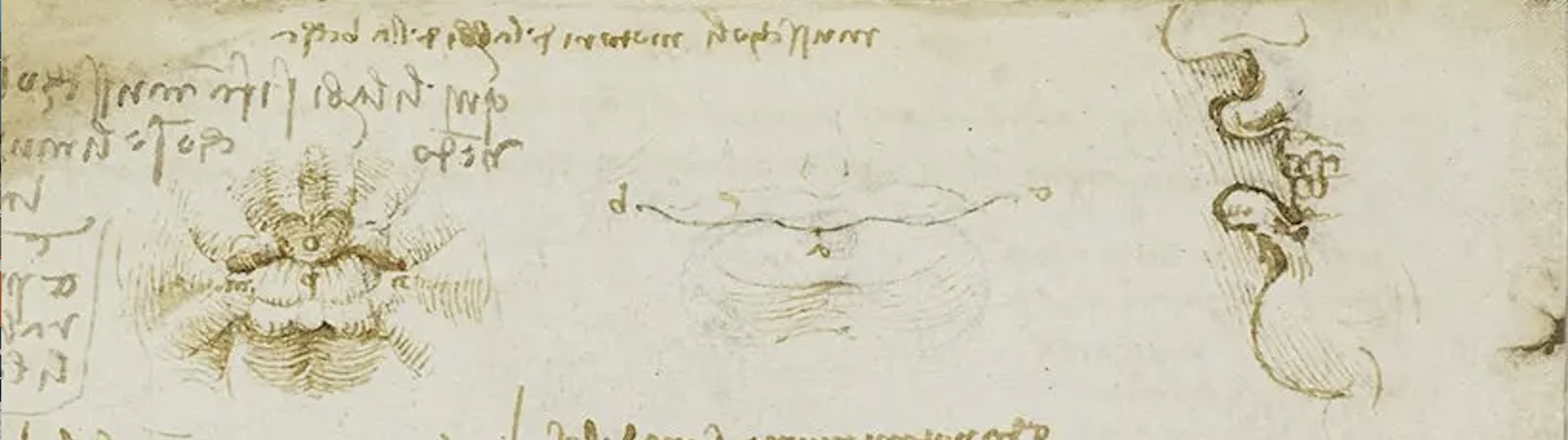
Leonardo's anatomical studies of facial muscles also fed into this trick. By subtly curving the corners of the mouth downward while blending shading upward, he created a smile that can't be pinned down. Depending on where you focus, it oscillates between gentle amusement and solemn restraint.
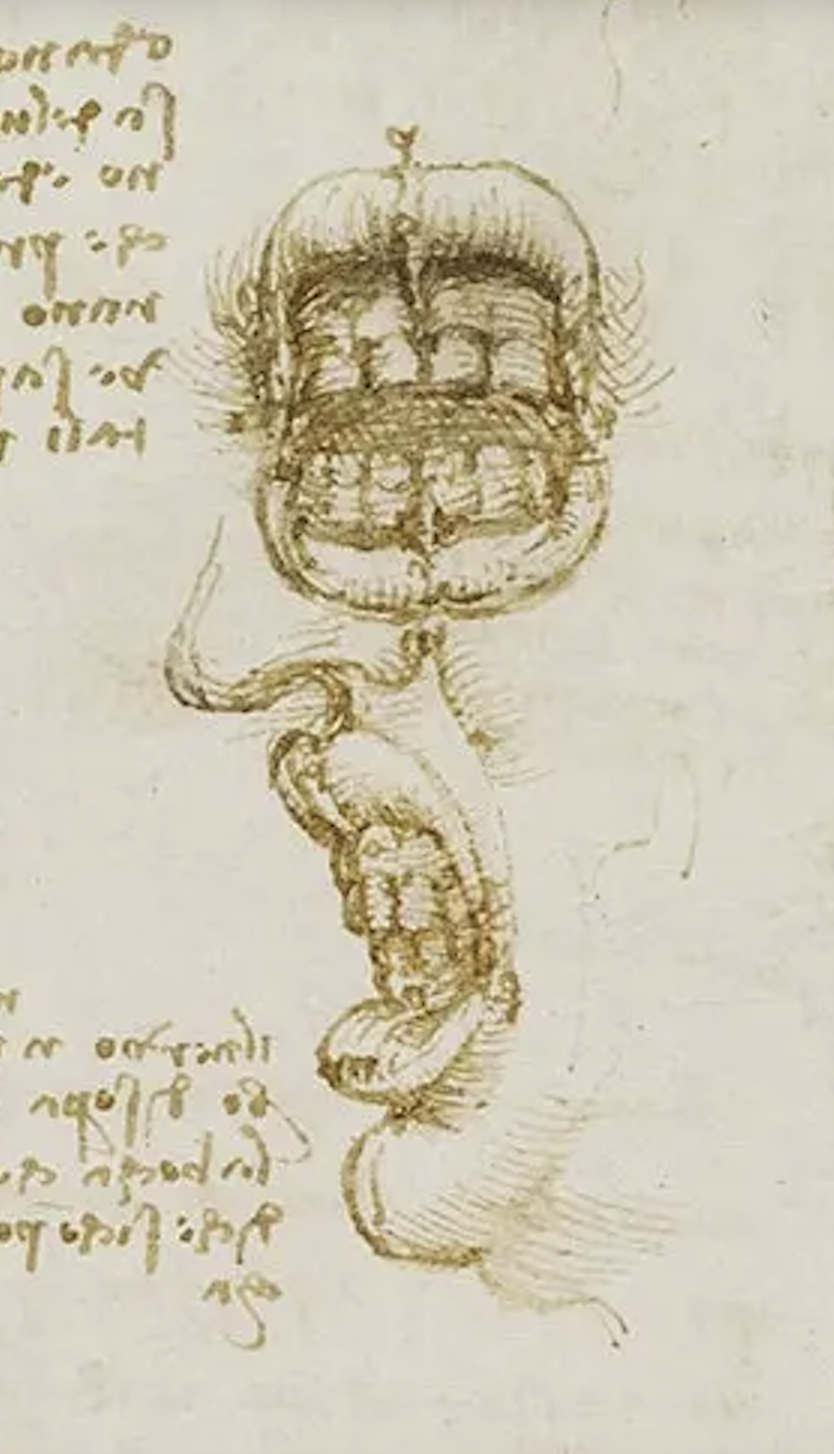
Recent psychological studies confirm this: shading around the lips plays with our brain's perceptual organization, producing ambiguity. The smile refuses to resolve, and that tension feels alive.
Anatomy, Optics, and Vision Science
Leonardo wasn't only an artist; he was an obsessive dissector of human anatomy and student of optics. He sketched the musculature of faces, the scattering of light in the eye, and the difference between central and peripheral vision.
He understood that the fovea — the small central part of the retina — detects fine detail and color, while the periphery is more sensitive to broader shapes and shadow. By designing Lisa's expression to register differently in central and peripheral vision, Leonardo created an image that seems to shift depending on how we look at it.
Few artists before or since have so directly harnessed how the human visual system works to create illusions of presence.
Living Presence Through Ambiguity
Modern neuroscience interprets the Mona Lisa as not just a portrait but a cognitive experiment. Ambiguities in gaze, smile, and contour activate higher brain functions involved in social reasoning and emotional interpretation. We don't just see Lisa — we simulate her presence, trying to read her thoughts and moods.
That constant interpretive effort is why she feels alive. Instead of resolving into a single fixed expression, she resists closure. The viewer's brain keeps working, engaging, projecting — an endless conversation across five centuries.
Imagine Seeing This in Leonardo's Time
When Leonardo revealed the painting in the early 1500s, there was nothing comparable. No photographs, no other portraits with such subtle blending or optical ambiguity. Viewers encountered not just a likeness but a puzzle — an image that seemed to breathe.
Leonardo refined the work over many years, even taking it with him to France when he entered the service of King Francis I. After his death in 1519, the painting passed through royal collections before settling into the Louvre, where it continues to confront millions each year.
Why the Mona Lisa Still Captivates Us
Half a millennium later, the portrait still entrances not because of ostentation, but because of restraint. Leonardo withheld certainty.
The smile never resolves. The gaze never settles. The face seems to shift with the light and your own focus.
Each viewing is slightly different, not because the painting changes but because you do. Your eyes, brain, and emotions complete the work. Leonardo engineered ambiguity, not clarity, and in that ambiguity lies timeless fascination.
Final Thoughts
Leonardo da Vinci was more than a painter — he was a scientist of vision. In the Mona Lisa, he fused anatomy, optics, and psychology into a single canvas. He didn't just depict Lisa Gherardini; he designed an encounter that unfolds in real time, in the viewer's own perception.
That's why five centuries later, we don't merely look at the Mona Lisa. We experience her — her gaze, her smile, her presence. She seems to look back, shift, breathe, and feel. And that illusion of life, born from Leonardo's unparalleled grasp of human vision, is what makes the Mona Lisa eternally mesmerizing.
Further Reading
The Mona Lisa — Louvre Official Collections
The museum's own scholarly entry for the painting, with provenance, conservation history, and full documentation.
collections.louvre.fr/en/ark:/53355/cl010066723
Margaret Livingstone, Vision and Art: The Biology of Seeing (Harry N. Abrams, 2002)
The Harvard neurobiologist whose research revealed the science behind the disappearing smile. Accessible, beautifully illustrated, and fascinating for anyone interested in how the eye and brain process what we see.
amazon.com/Vision-Art-Biology-Margaret-Livingstone/dp/0810995549
Horstmann & Loth, "The Mona Lisa Illusion" (i-Perception, 2019)
The peer-reviewed study that measured her gaze angle at 15.4 degrees — and concluded, somewhat delightfully, that the Mona Lisa does not actually demonstrate the effect named after her.